
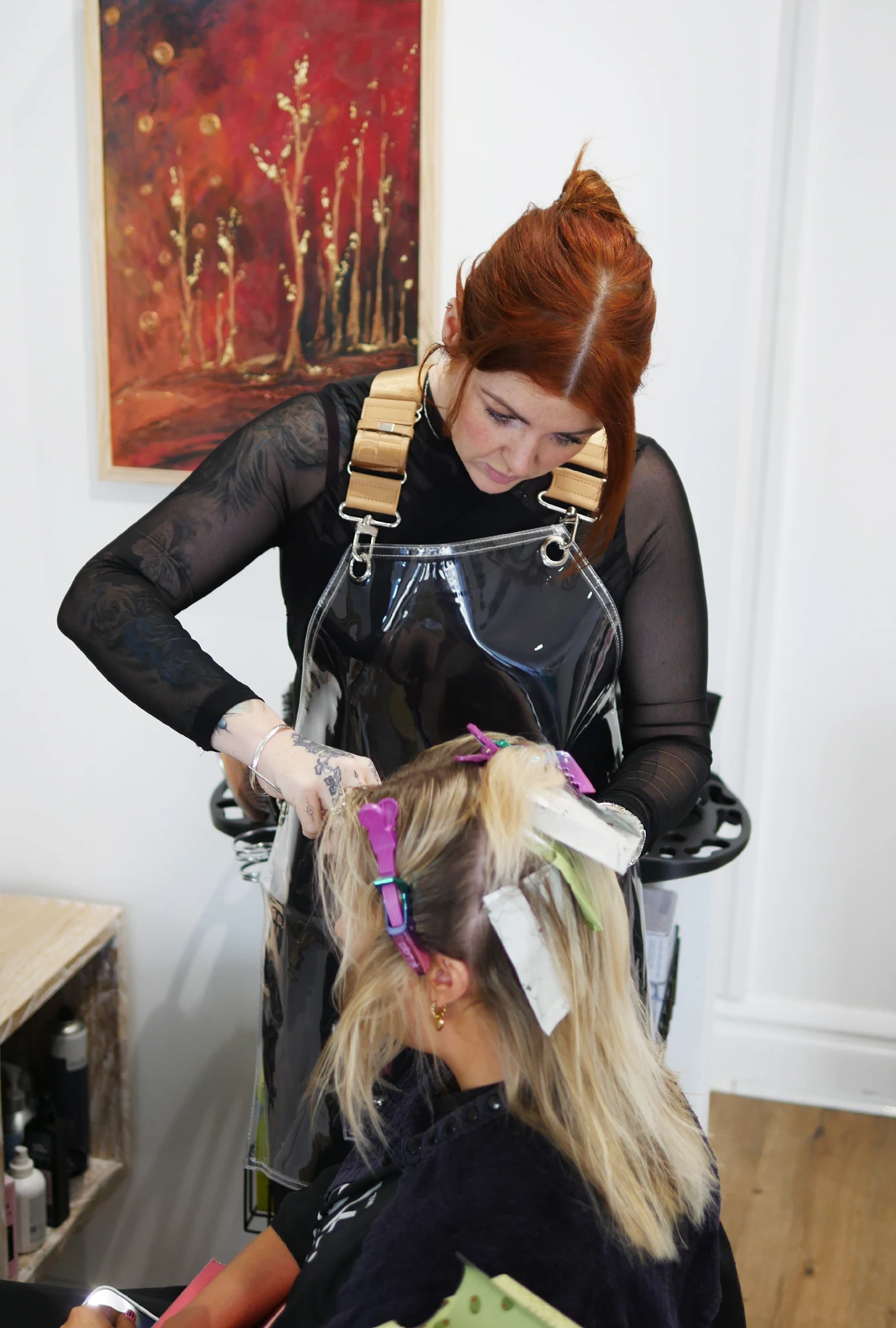
Colour correction is a category, not a single formula.
A correction may mean softening bands, removing unwanted depth, balancing brassiness, filling missing warmth, repairing an uneven application or rebuilding a colour that no longer suits the person wearing it. Sometimes the issue is obvious. Sometimes it only appears in certain light, through the mid-lengths, or where several previous colour services overlap.
That is why two heads of hair with the same inspiration photo can require completely different plans. Natural pigment, previous artificial colour, texture, density, porosity and current condition all affect what can happen next. A successful correction respects the starting point instead of treating every client like a blank canvas.
The consultation is where the technical work begins.
Before choosing a formula, Jamie-Lee needs the story of the hair: professional colour, box colour, lightening, toners, vivid shades, smoothing services and anything else that may influence how it responds. Inspiration images help define the direction, while an honest conversation clarifies priorities, timing, maintenance and the shades you do not want to see again.
The hair itself then has to be assessed. Distribution of colour, elasticity, dryness, breakage, density and differences between the roots, mid-lengths and ends all matter. Strand testing or staged testing may be recommended when the history is complex or the likely response is uncertain. The aim is not to make the appointment feel longer; it is to remove avoidable guesswork before chemistry is applied.
There is real science beneath every visible shade.
Hair colour lives through the structure of the fibre. The cuticle forms the outer surface and the cortex holds much of the natural pigment and strength. Lightening uses oxidation to break down pigment, while permanent colour relies on controlled chemical reactions to develop colour within the fibre. As darker pigment lifts, underlying warmth becomes visible in predictable stages; those stages have to be considered when neutralising or changing direction.
Previous chemical work also changes how evenly hair accepts and releases colour. More porous areas can absorb tone quickly and lose it differently, while resistant areas may respond slowly. This is why a single blanket formula can create new bands instead of resolving the old ones. Formula, placement, timing, saturation and the order of each step must work together.
For readers who enjoy the technical detail, published microscopy research on bleached hair shows why repeated or excessive lightening has to be managed carefully: changes can occur at both the cuticle and cortex.
Decades behind the chair build pattern recognition.
After two decades in colour, styling and extensions, Jamie-Lee is not looking at one formula in isolation. Experience makes it easier to recognise familiar warning signs, predict where warmth may appear, anticipate how different sections may lift and adjust the plan while protecting the strongest possible finish.
That experience is equally important when the right decision is to slow down. Technical confidence is not promising that every photograph can be recreated in one day. It is knowing when to change the target, separate the work into zones, build softness gradually or stop before the hair is asked to do too much. You can read more about Jamie-Lee's approach and review her professional training and credentials.
A thoughtful correction may be one appointment or a journey.
Some corrections can be resolved in one considered session. Others need staged appointments, a revised goal or a period of supportive home care before more lightening is sensible. The consultation establishes that pathway before a larger block of time is reserved.
At Muse & Moonlight, colour correction starts from $450. The final quote reflects the starting point, product required, complexity and time involved, so it is confirmed after assessment rather than forced into a generic package. See the pricing guide for context, then begin with a consultation so the recommendation belongs to your hair.
Before your consultation
Bring the history, not just the goal.
- Bring current inspiration images and photographs of earlier colours where possible.
- List professional colour, at-home colour, lightener and smoothing services honestly.
- Share any recent breakage, unusual dryness or changes in how the hair feels.
- Explain your ideal maintenance rhythm and how much time you style at home.
- Be open to a staged plan when protecting the hair requires it.